

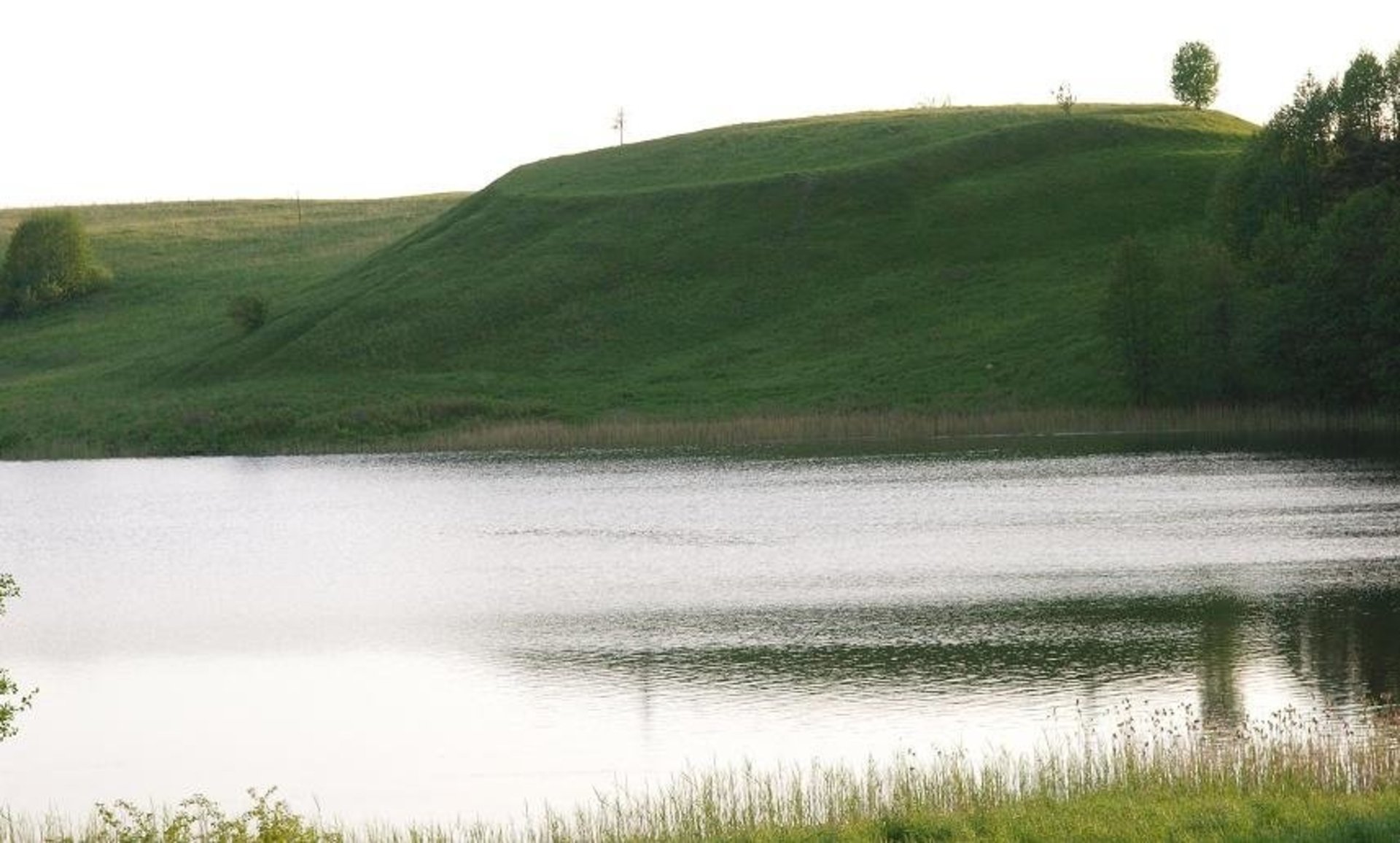
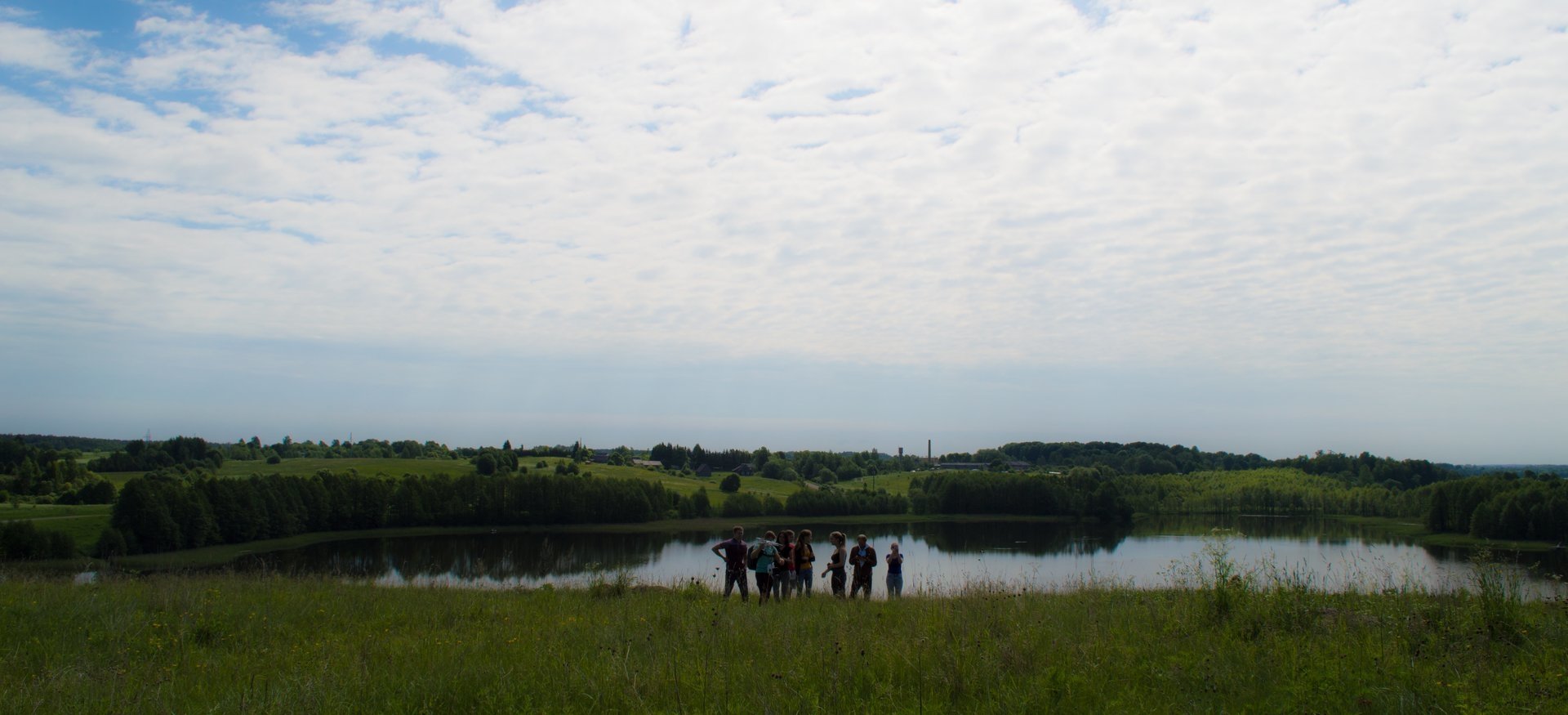
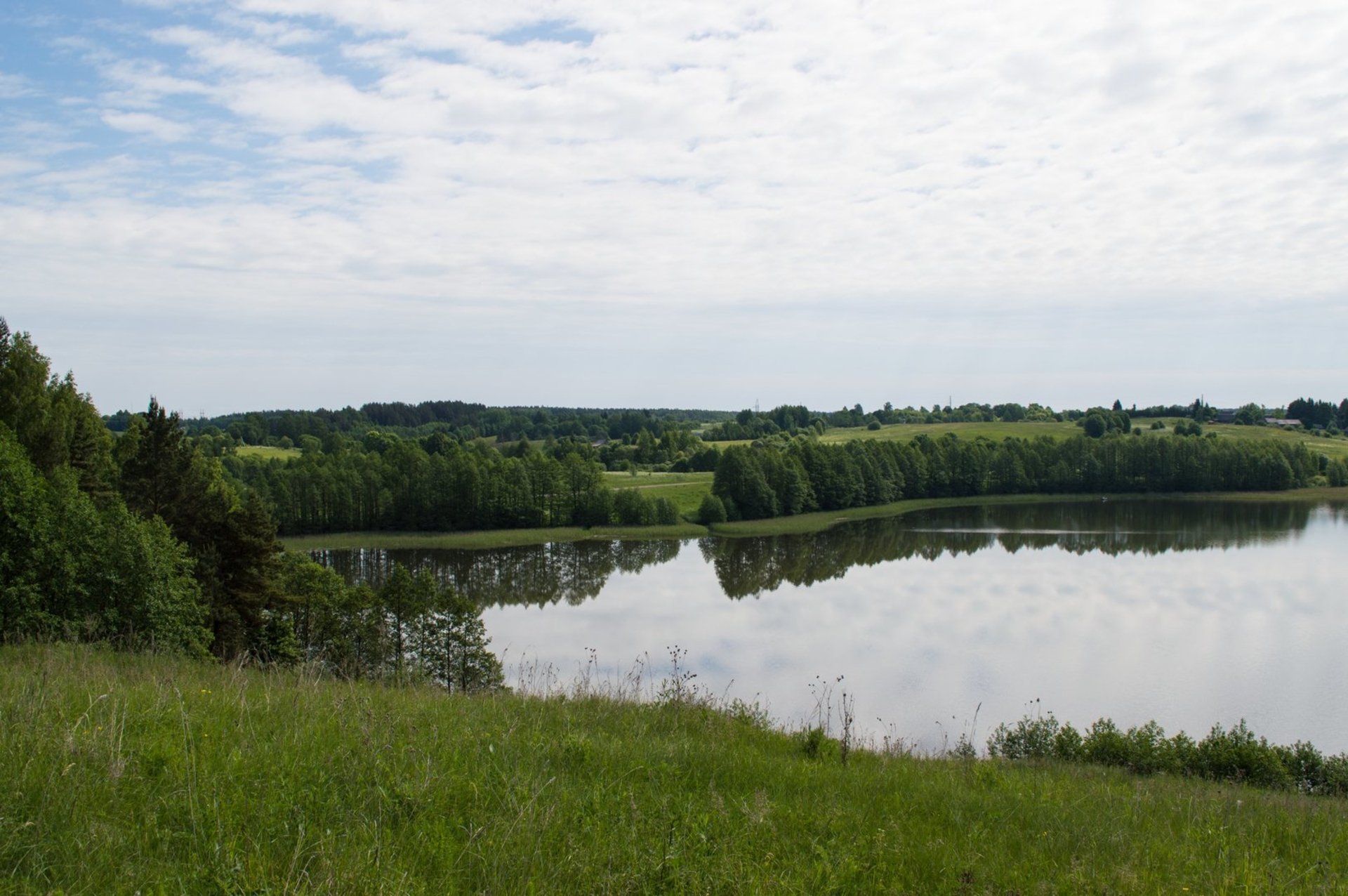
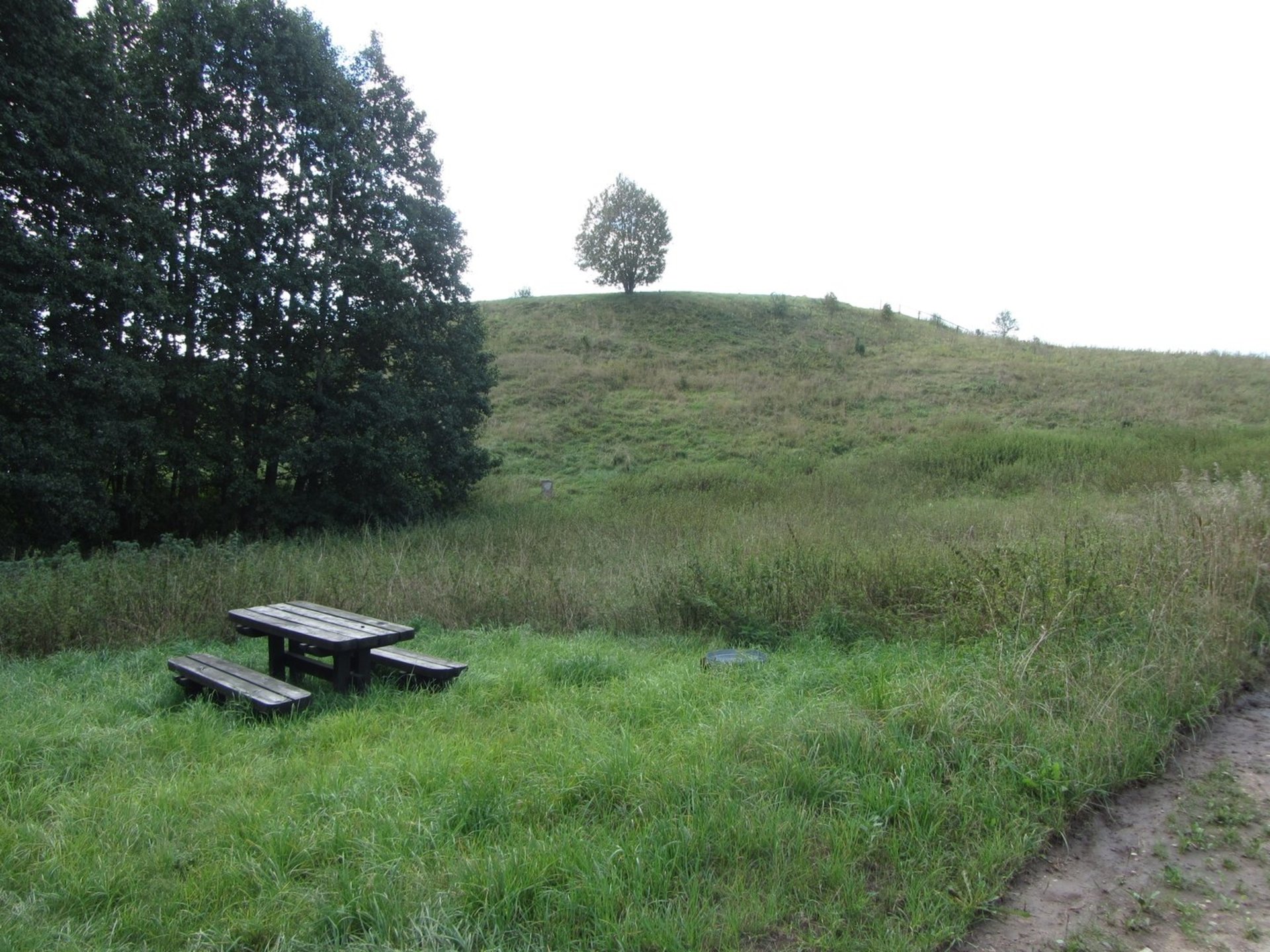
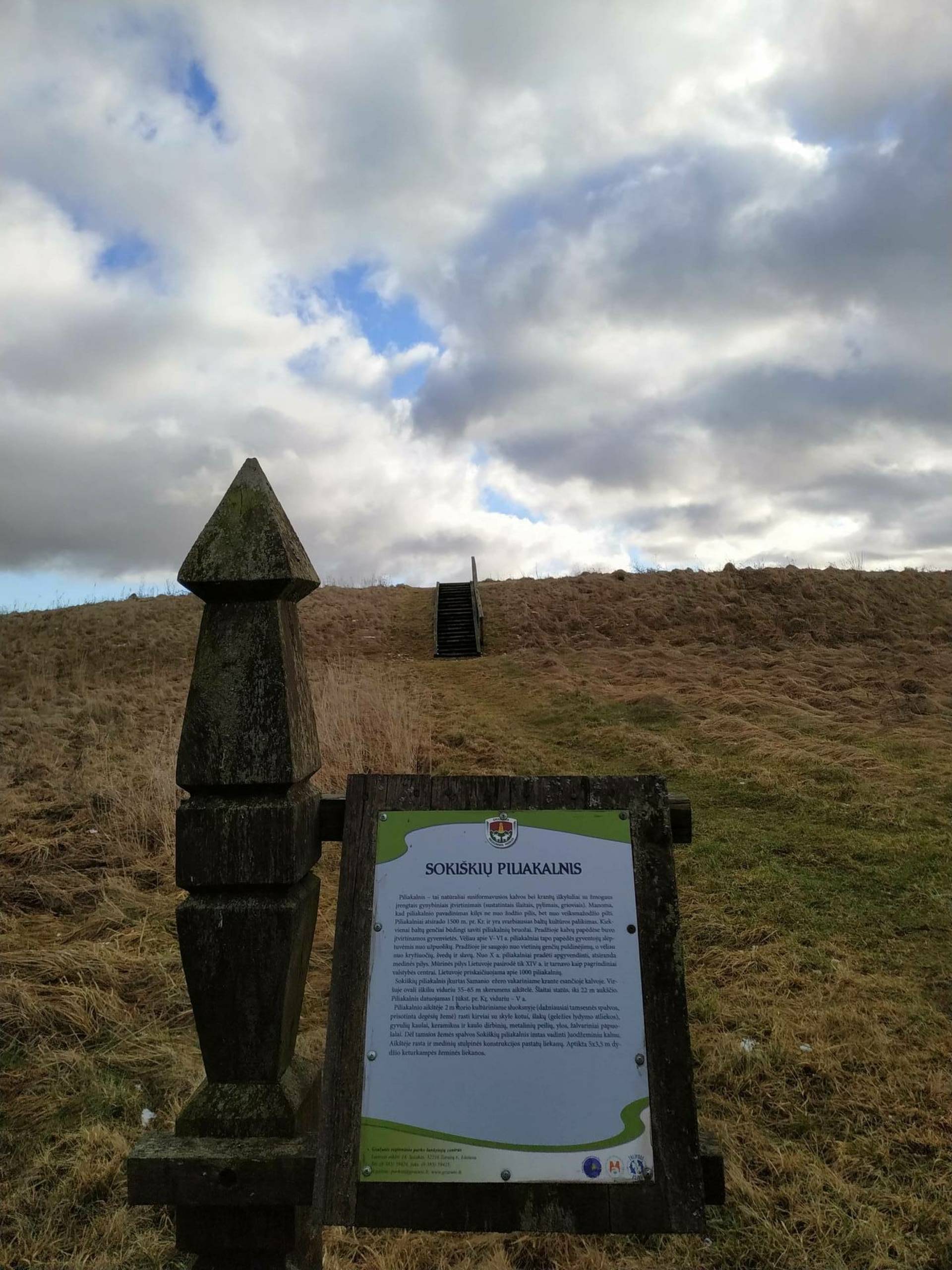
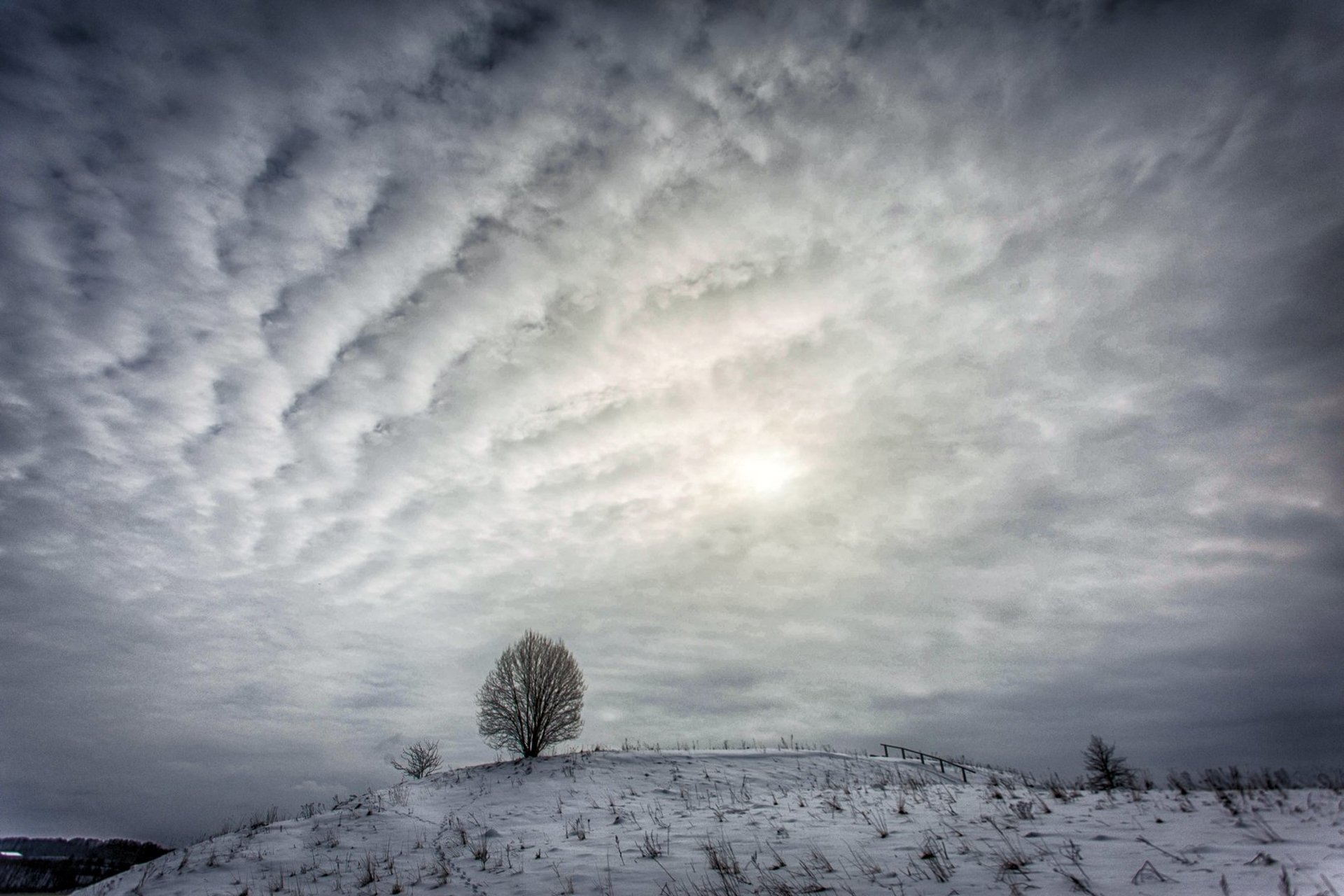
Sokiškės hillfort with settlement, Juodžeminis Kalnas – a hillfort (unique object MC code 1979; List of Cultural Monuments of the Republic of Lithuania No. AR196; Register until April 19, 2005 No. A1513K) and settlement (unique object MC code 24757) in the territory of Ignalina District Municipality, east of Sokiškės, Dūkštas Eldership. The hillfort is located on a separate hill on the western shore of Lake Samanis. The site is oval, with a raised middle (55-65 m in diameter), elongated in the northeast-southwest direction, 68x56 m in size, with a raised middle, with a 4 m lower southeastern part. The slopes are steep, from 4 m high in the west to 22 m. The hillfort was plowed for a long time, the upper part of the cultural layer was destroyed. Now it is lying fallow.
To the south, southwest and northwest of the mound, in an area of 6 hectares, there is a foothill settlement, where streaked, smooth and rough ceramics, a bone awl, and a clay spindle whorl were found.
In 1958, the mound was explored by the Institute of History. The finds are preserved by the National Museum of Lithuania.
In 1980–1983, Elena Grigalavičienė examined the largest part of the mound site – a total of 1115 m², and discovered a cultural layer up to 2 m thick with various finds: stone adzes and axes with a hole for the handle, slag, animal bones, streaked, smoothed, rough ceramics, bone artifacts. A shallow ditch 2–3 m wide at the top and up to 1.5 m wide at the bottom was discovered in the northwestern – northeastern edge of the site, behind which a rampart 2 m wide at the base, up to 0.7 m high, and a second ditch 5 m wide and up to 2 m deep was dug behind it. A wooden barrier stood on its inner side. These fortifications most likely surrounded the entire site. A 1.7 m wide gate was installed on the northwestern edge of the site, which was supported on the sides from the slope of the enclosure by rows of 5.5 m long pillars. The first wooden buildings of pillar construction stood closer to the center of the site. They burned down, and new ones were rebuilt closer to the edges of the site, where the former ditch was leveled. After the latter burned down again, the defensive devices of the mound were rearranged: the outer ditch was closed, slopes were built, and the site was expanded outwards. Among the more obvious remains of buildings, a 5x3.5 m square earthen pit was discovered, deepened to 1 m. In the last period, metal tools were already used: knives, awls, brass jewelry: bracelets, chains, and fragments of spearheads were also found.
In total, about 700 artifacts were found: 500 made of bone, 107 made of stone, 9 made of horn, 53 made of clay, 13 made of iron, 6 made of brass, more than 10,000 fragments of molded pottery, and about 11,000 animal bones.
The mound dates back to the 4th quarter of the 1st millennium BC – 5th century. Order of the Minister of Culture of the Republic of Lithuania on recognition as a state monument – 2005-04-29; No. ĮV-190. The area of the monument territory is 40,000 m². The area of the visual protection zone is 3,502,000 m².
Information updated 2025-12-12
Reviews