
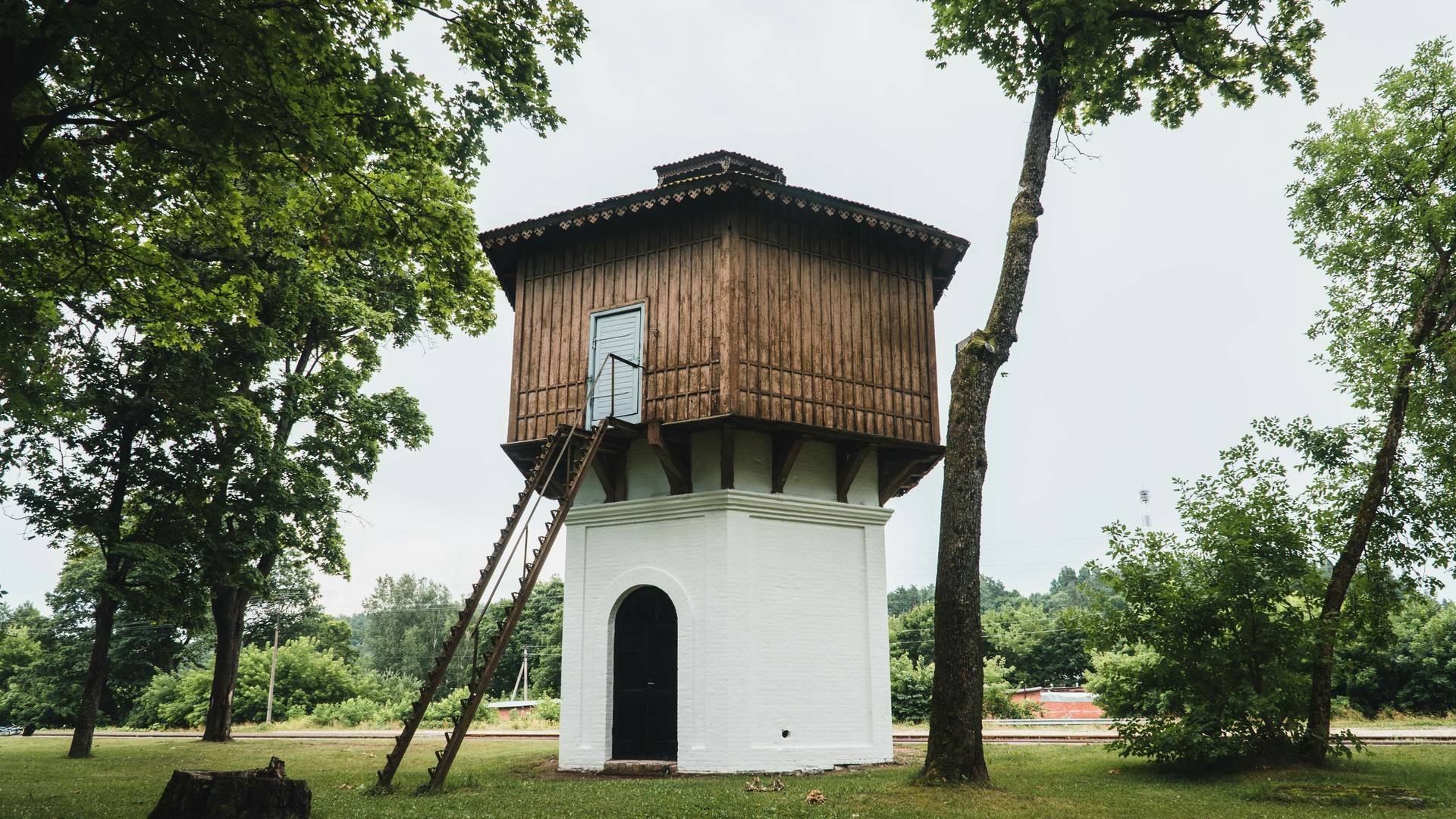
Water towers from the Tsarist railway period are most notable for their interesting forms. First of all, they are hydraulic structures, extremely important elements of railway infrastructure, where water needed by steam locomotives is taken from the nearest body of water. If the tower was located far from a convenient access, then water columns were used, into which water flowed from a reservoir (tower). The water supply system was built away from the tower, its system required constant maintenance, so usually there was also an employee's house next to the pumping station.
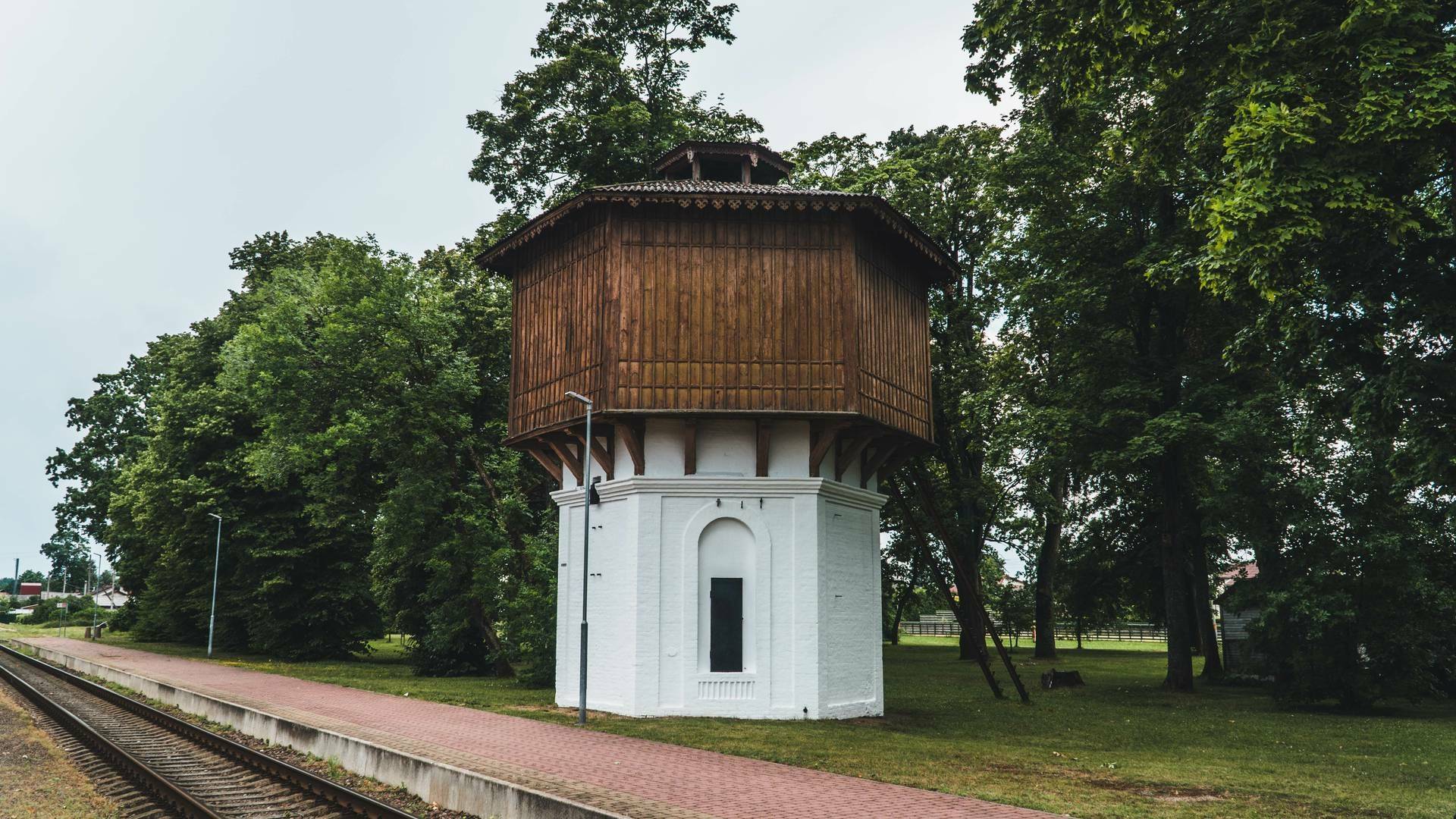
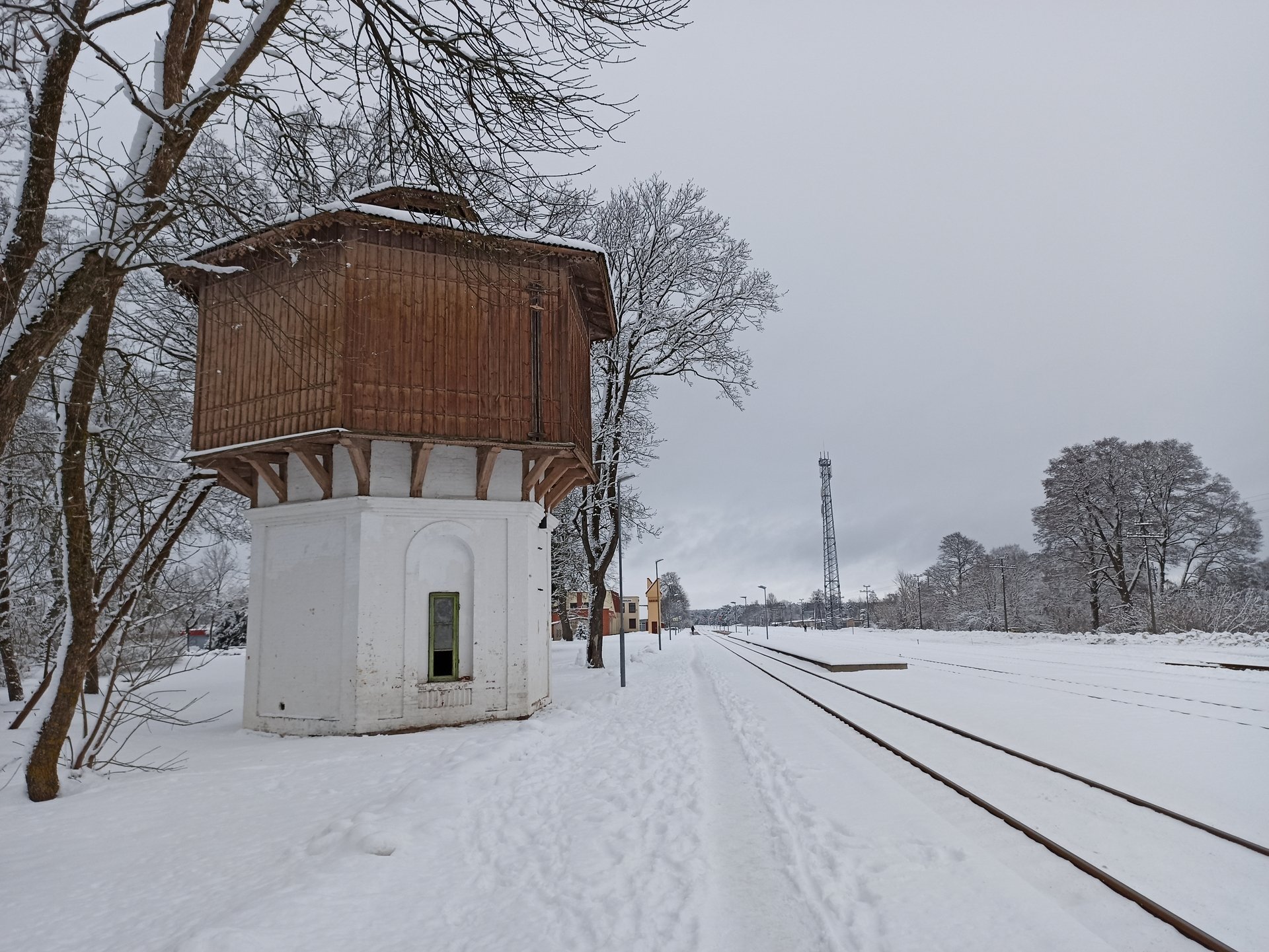
Water towers are special highlights of the railway station. Unfortunately, not all railway stations survived after World War II, but residents of the cities of Ignalina and Dūkštas can enjoy this surviving part of history. The towers are distinguished by their vertical volume, were quite tall and perfectly visible in the environment, the architecture is dominated by stone foundations, a lower masonry and an upper wooden stage – the capacity of the water reservoir is installed in it. Wood carving is characterized by quite expressive decor. Comparing the surviving examples, two types of water towers built during the tsarist period stand out: larger ones – in the shape of an elongated octagon and smaller ones – in the shape of a regular octagon.
Ignalina Station had a brick, tin-covered water tower, from which a water supply was built. Water flowed through the water supply to a hydraulic tap installed at the end of the second platform on the St. Petersburg side. The tower was intended for pouring water into steam locomotives, and later supplied water to neighboring houses. The Ignalina Station water tower was built around 1862, hexagonal in shape, with two floors, and one tank. Its first floor was brick, with arched openings. The second floor was wooden, slightly larger than the first, and was intended for a water tank. It was accessed by a ladder through a small door. Such towers were built according to typical designs. The water tower has survived to this day. Such a tower could supply 51 cubic meters of water per day. Steam locomotives were supplied with water from a lake, which was connected to the pumping station by a pipe. The pumping station supervisor's residence stood next to the pumping station. In a later period, when steam locomotives were replaced by more economical diesel ones, water towers were no longer used. The water tower of Ignalina railway station is included in the Register of Cultural Properties (KVR unique number 21300).
Information updated 2026-01-12
Reviews